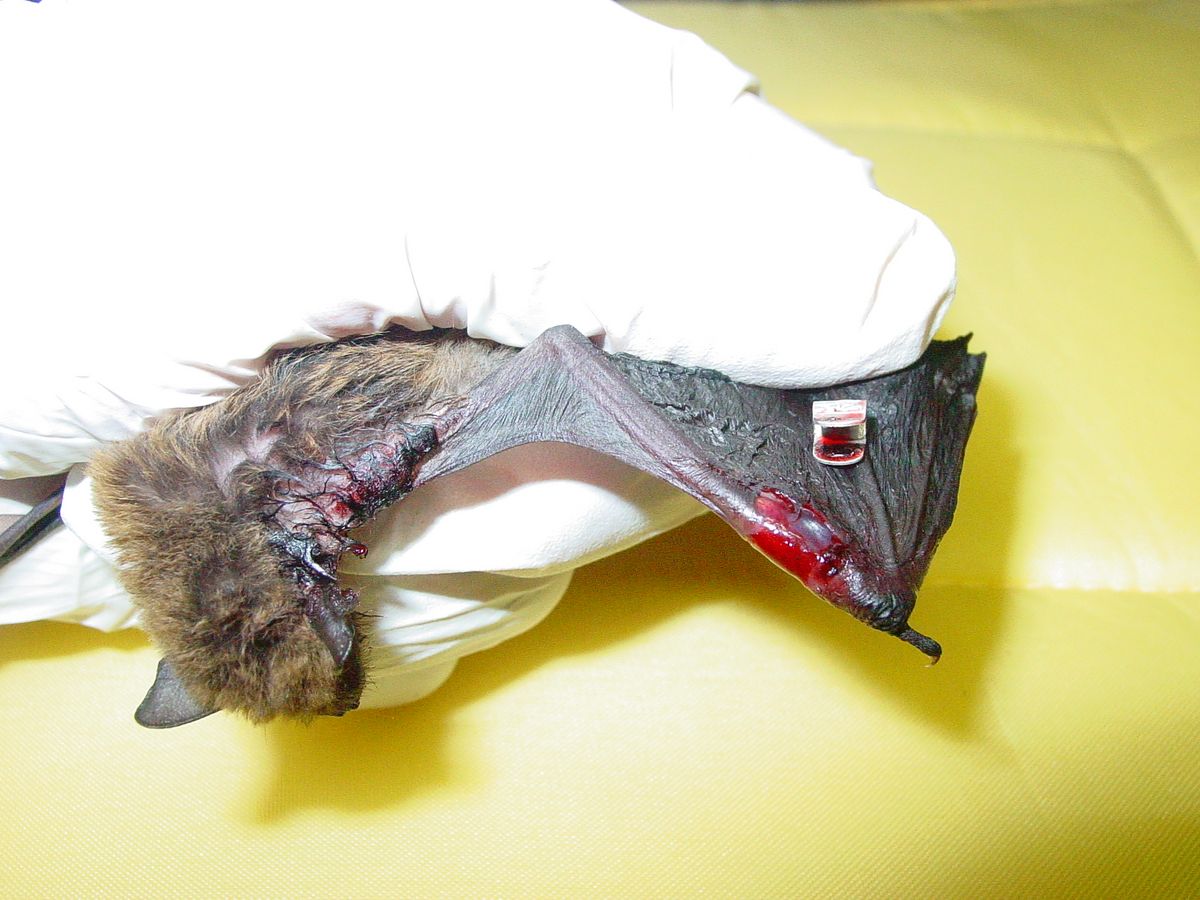
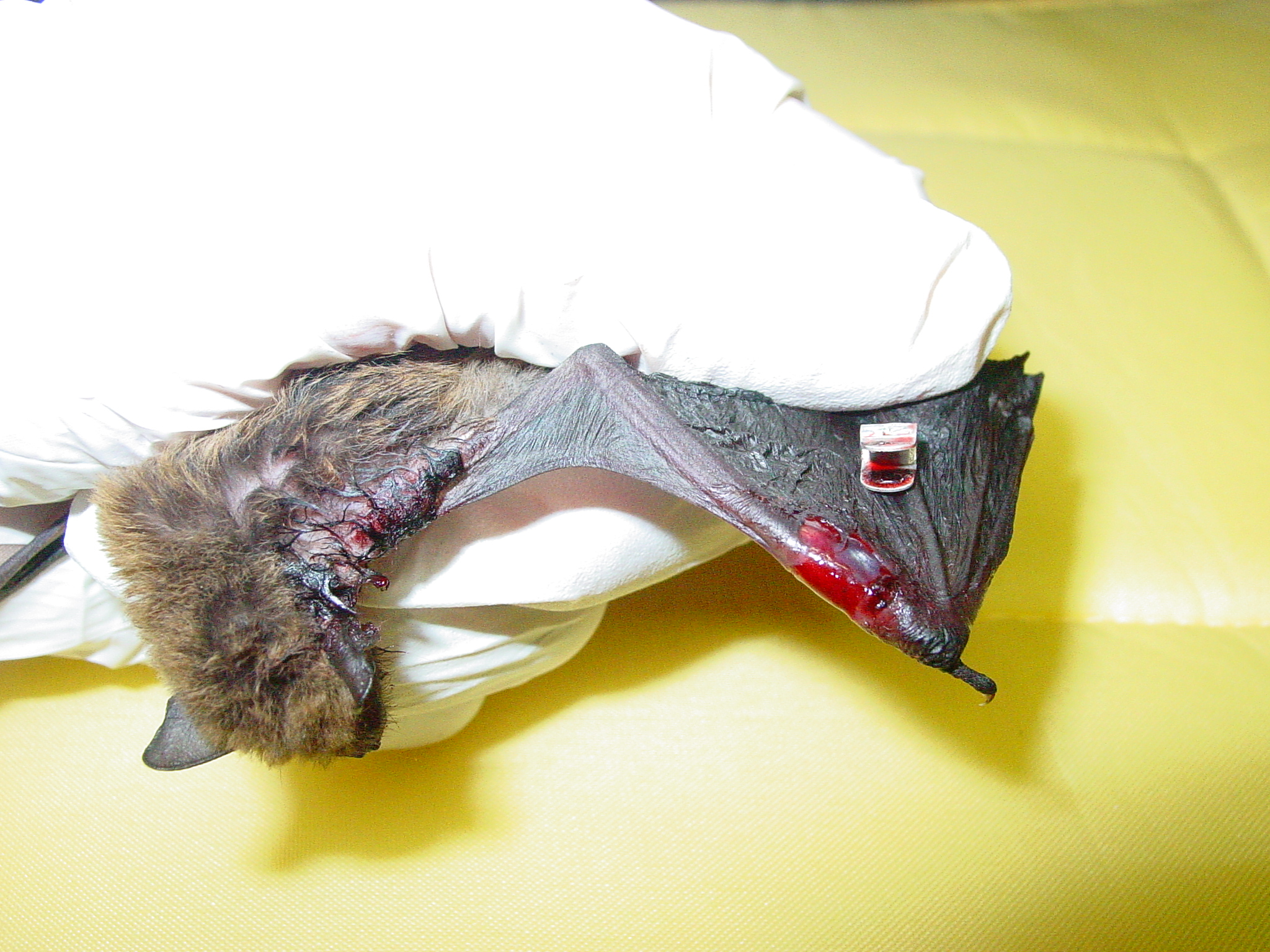
 Fledermaus mit Ringverletzung // Bat with batring injury
(Dr. Renate Keil
/
www.bund-fledermauszentrum-hannover.de)
Fledermaus mit Ringverletzung // Bat with batring injury
(Dr. Renate Keil
/
www.bund-fledermauszentrum-hannover.de)
Rings can cause injuries at the wing skins - if they get infected, they can be fatal for bats without medical care. The ring injuries occur regardless of person who puts the rings on the bats and regardless of the series of the rings. Wild bats cannot get any help so bat rings can be a serious danger to life for the bats.
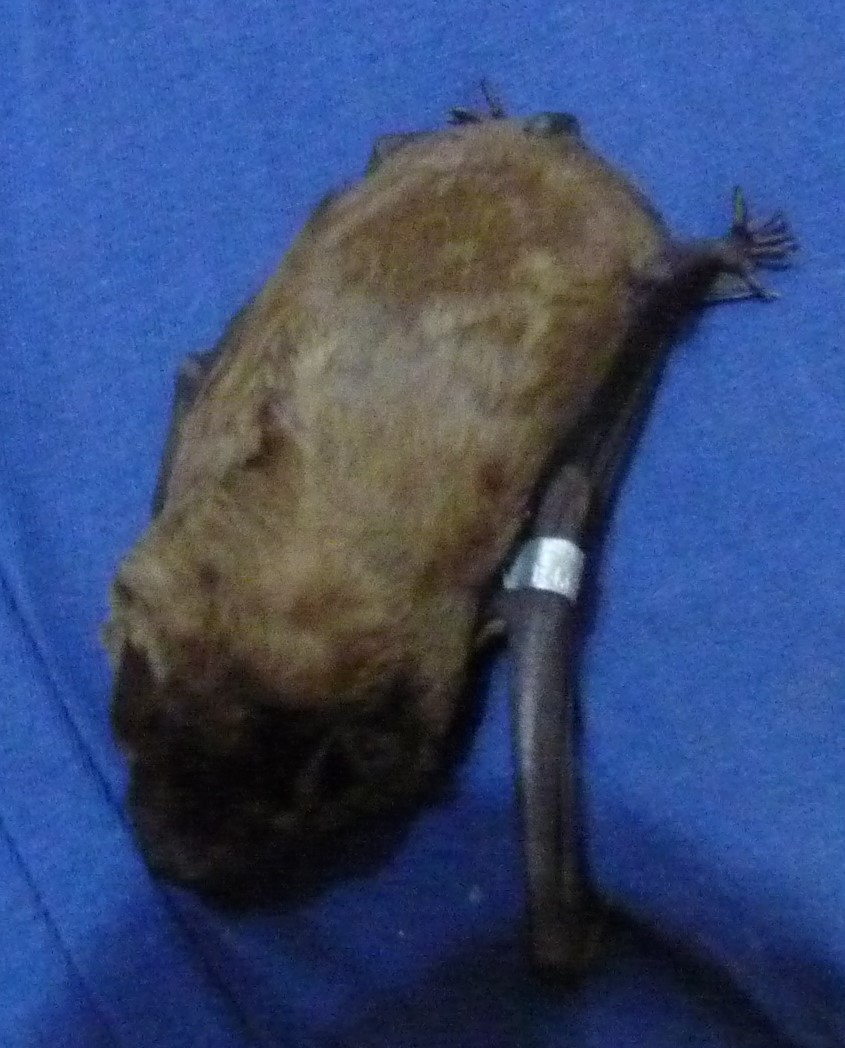 Fledermaus mit Ringverletzung // Bat with batring injury
(Gudrun Becker
/
www.bund-fledermauszentrum-hannover.de)
Fledermaus mit Ringverletzung // Bat with batring injury
(Gudrun Becker
/
www.bund-fledermauszentrum-hannover.de)
The ring moved too far in the direction of the elbow and got stuck there. In nature, the animal would have died on the restricted wing function.
We strongly recommend not to ring wild bats.
Signs of wear of bat rings
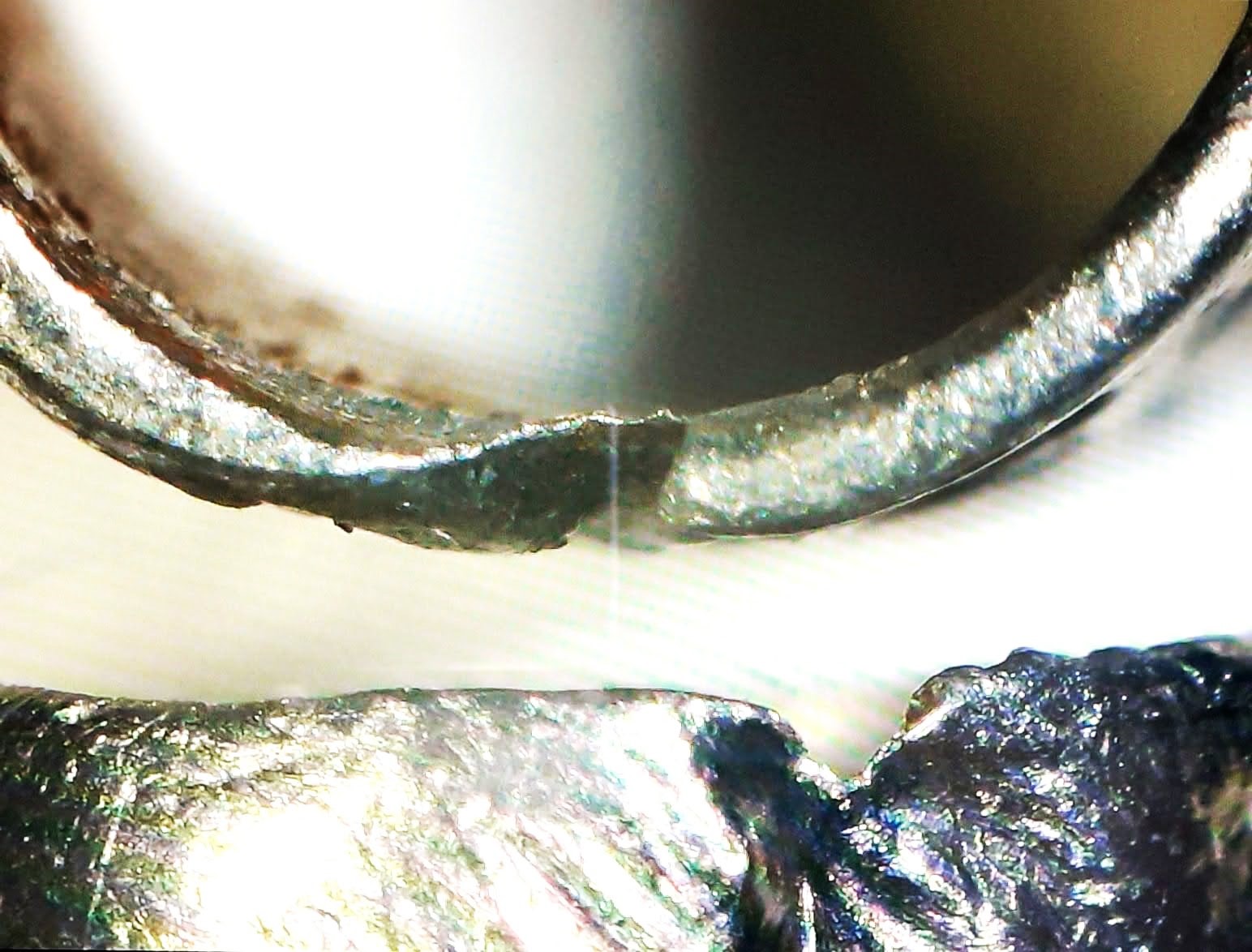 2 stark vergrößerte Ringe (Mikroskopaufnahme) mit scharfen Kanten // 2 greatly enlarged rings (microscope image) with sharp edges.
(Dr. Renate Keil
/
www.bund-fledermauszentrum-hannover.de)
2 stark vergrößerte Ringe (Mikroskopaufnahme) mit scharfen Kanten // 2 greatly enlarged rings (microscope image) with sharp edges.
(Dr. Renate Keil
/
www.bund-fledermauszentrum-hannover.de)
Bat rings can show such sharp edges form as a sign of wear. This can hardly be seen with the eye, but can injure the flight membranes and lead to infections. On the photo you can see 2 greatly enlarged rings (microscope image) with sharp edges.
Rings can be a danger to wild bats
 Fledermausring // batring
(Dr. Renate Keil
/
www.bund-fledermauszentrum-hannover.de)
Fledermausring // batring
(Dr. Renate Keil
/
www.bund-fledermauszentrum-hannover.de)
Dr. Keil: “In the picture you can see a ring that has been nibbled by a bat. That is the reason why I am so against the unfounded ringing of bats: Ringing is a very serious intervention in the life of the animals, even if the clip appears harmless at first. Many of the animals affected pay for this with their lives when they can no longer hunt due to the injuries to their wings and starve or are eaten by predators.
Ringing should only be permitted only as an exception in cases of really important issues that have not been investigated many times before!
After finding this injured Myotis daubentonii bat, I myself ringed her for identification among many other bats for her stay in our station. Since the animals in our station are monitored daily, ring injuries can be recognized and prevented immediately. In the last few days the bat has nibbled two notches with sharp points in the ring! In the wild the forearm would be cut and swollen in just a few days, she would be unable to fly, and the infected forearm would mean her death. Sometimes bats start to work on the ring and the forearm in such a way on the first night that the next morning there is a bloody hole in the wing membrane, through which the clamp pressed together by the animal has pierced! I check each individual ring under a magnifying glass for damage and sharp edges! How often does something like this happen in the wild, where no one ever sees the animals again?"
All animals that are ringed at our station have their rings removed before they are released into the wild. The rings in our station are used to ensure that each animal receives individual therapy and training and to assign the release location, as this corresponds to the location where it was found.
Book: The Rehabilitation and Captive Care of Insectivorous Bats by Amanda Lollar
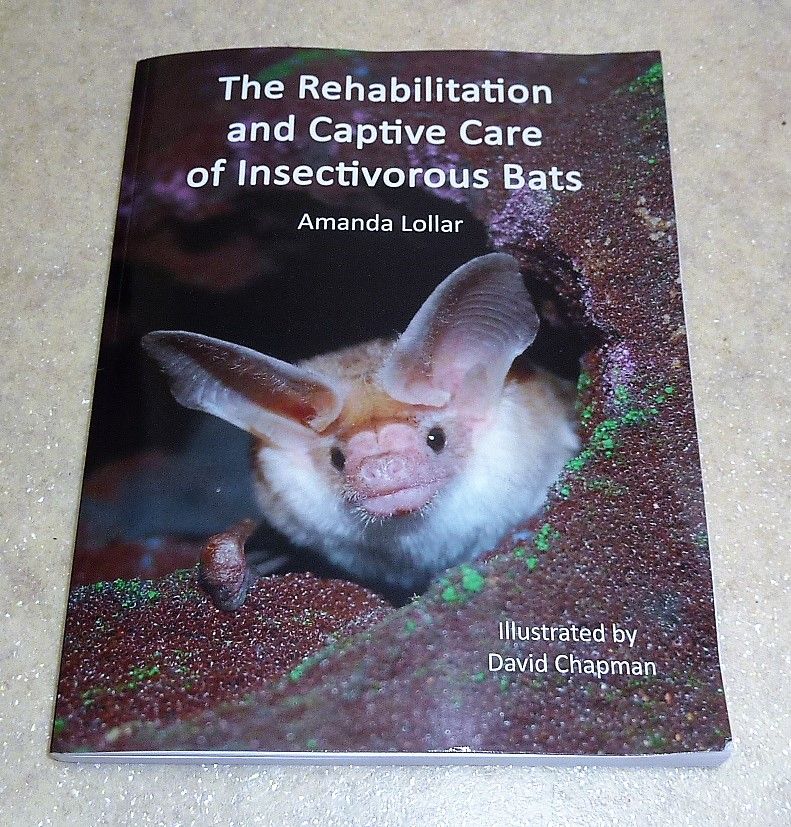 The Rehabilitation and Captive Care of Insectivorous Bats by Amanda Lollar
(Foto vom Buch: Gudrun Becker
/
https://batworld.org/)
The Rehabilitation and Captive Care of Insectivorous Bats by Amanda Lollar
(Foto vom Buch: Gudrun Becker
/
https://batworld.org/)
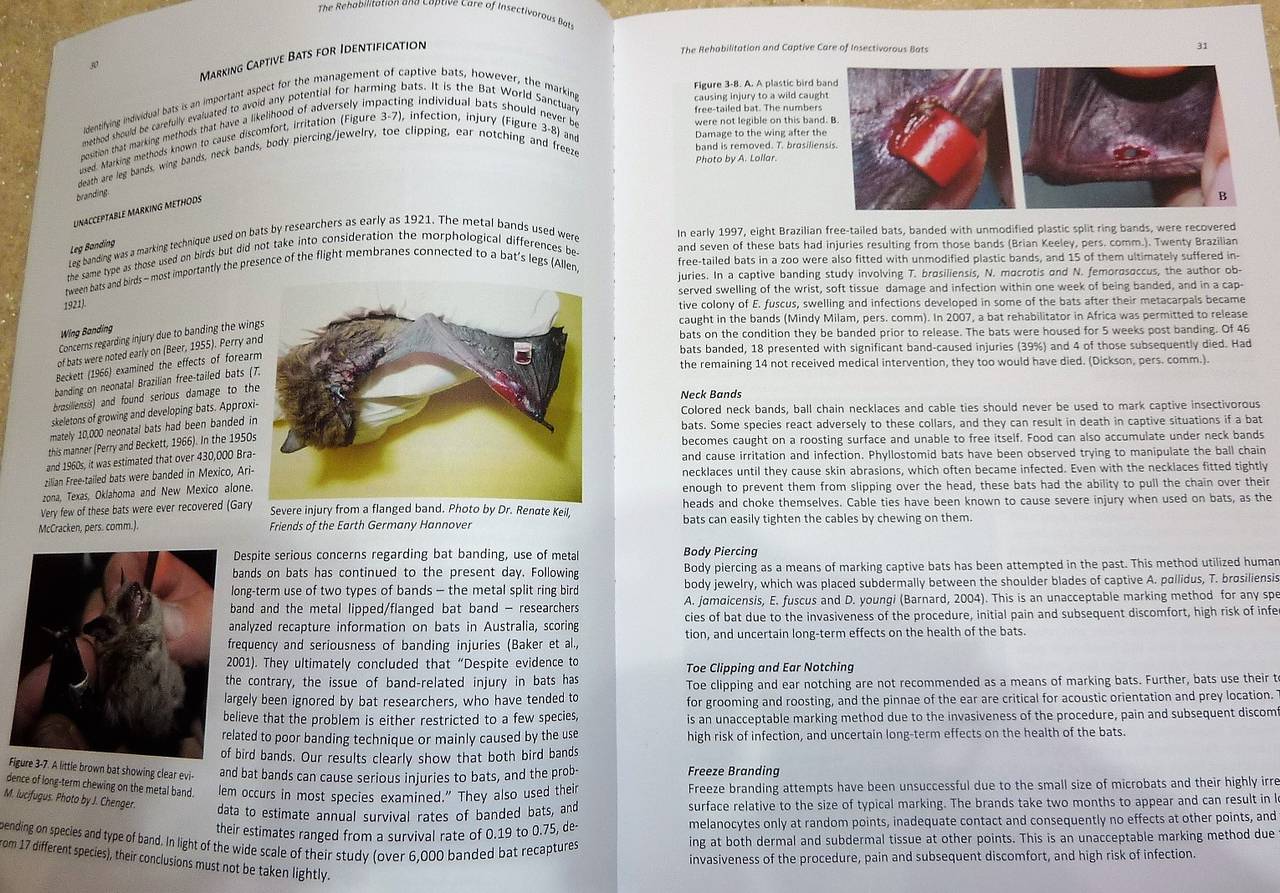
More information in the new book by Amanda Lollar. We thank Amanda and her team for their tireless commitment to bats. Here you can order the book.
===================================================
Make your selection in Threads for Bats :

================
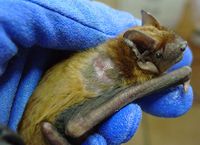

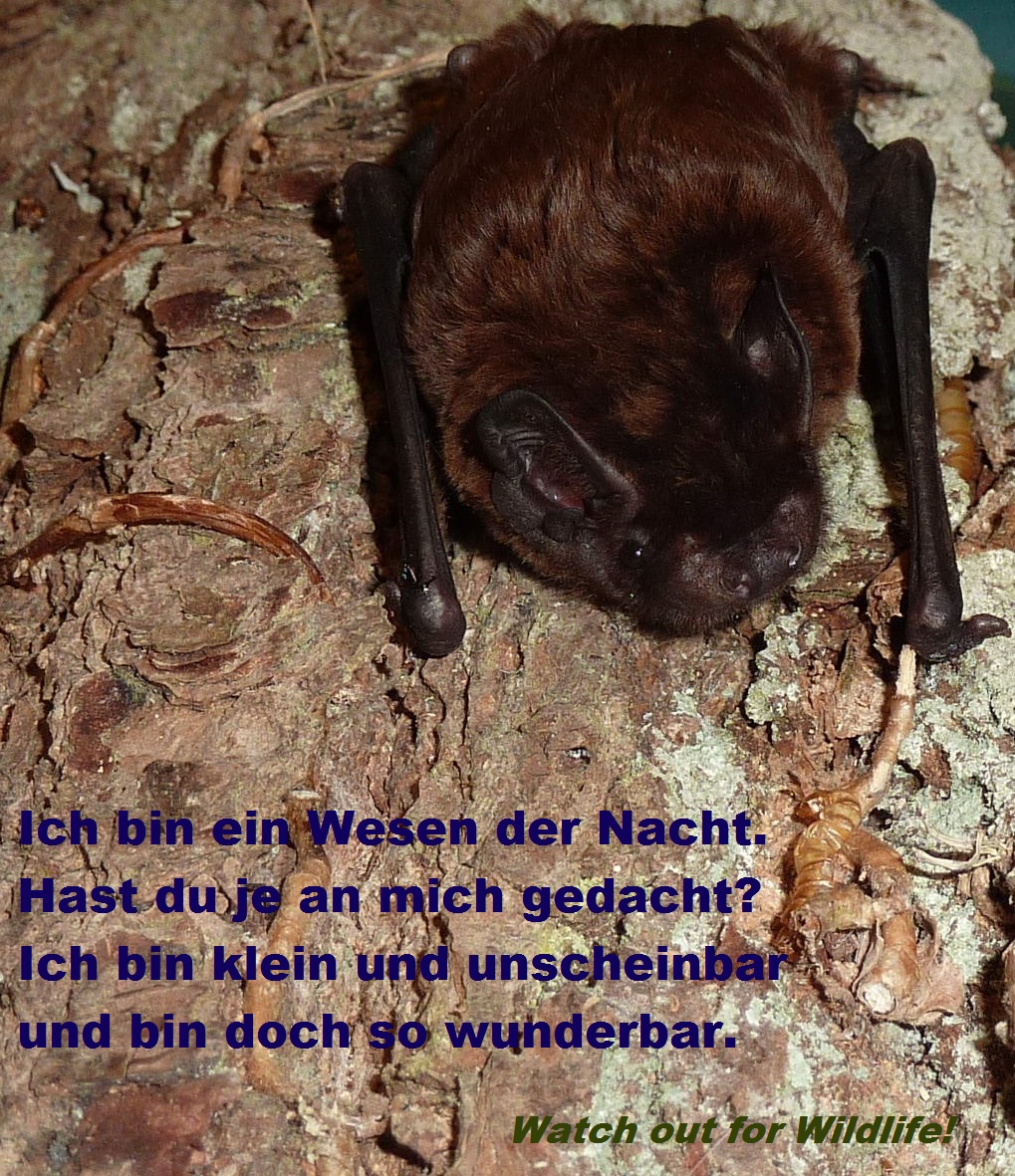 Kleinabendsegler Nyctalus leisleri
(Gudrun Becker
/
www-bund-fledermauszentrum-hannover.de)
Kleinabendsegler Nyctalus leisleri
(Gudrun Becker
/
www-bund-fledermauszentrum-hannover.de)
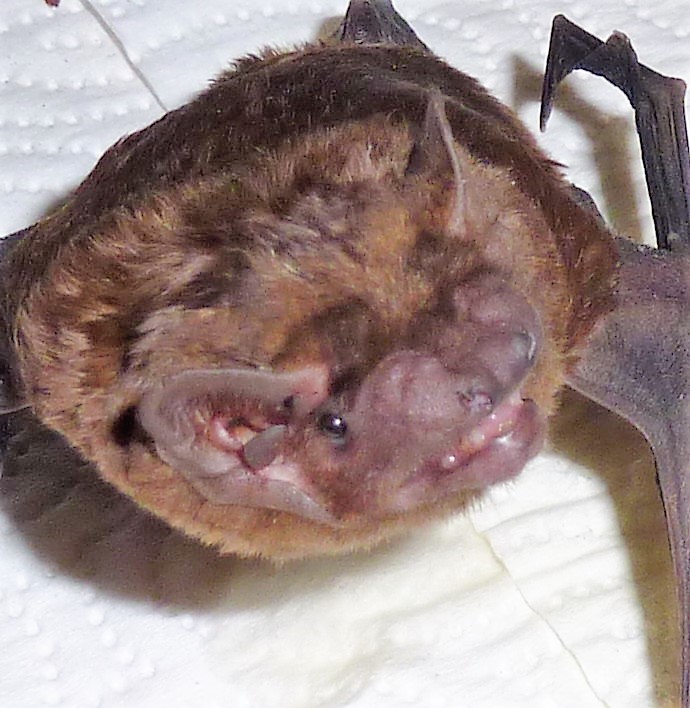 Großer Abendsegler Nyctalus noctula
(Gudrun Becker
/
www-bund-fledermauszentrum-hannover.de)
Großer Abendsegler Nyctalus noctula
(Gudrun Becker
/
www-bund-fledermauszentrum-hannover.de)
„The future should not be foreseen but made possible.“ (Antoine de Saint-Exupery)